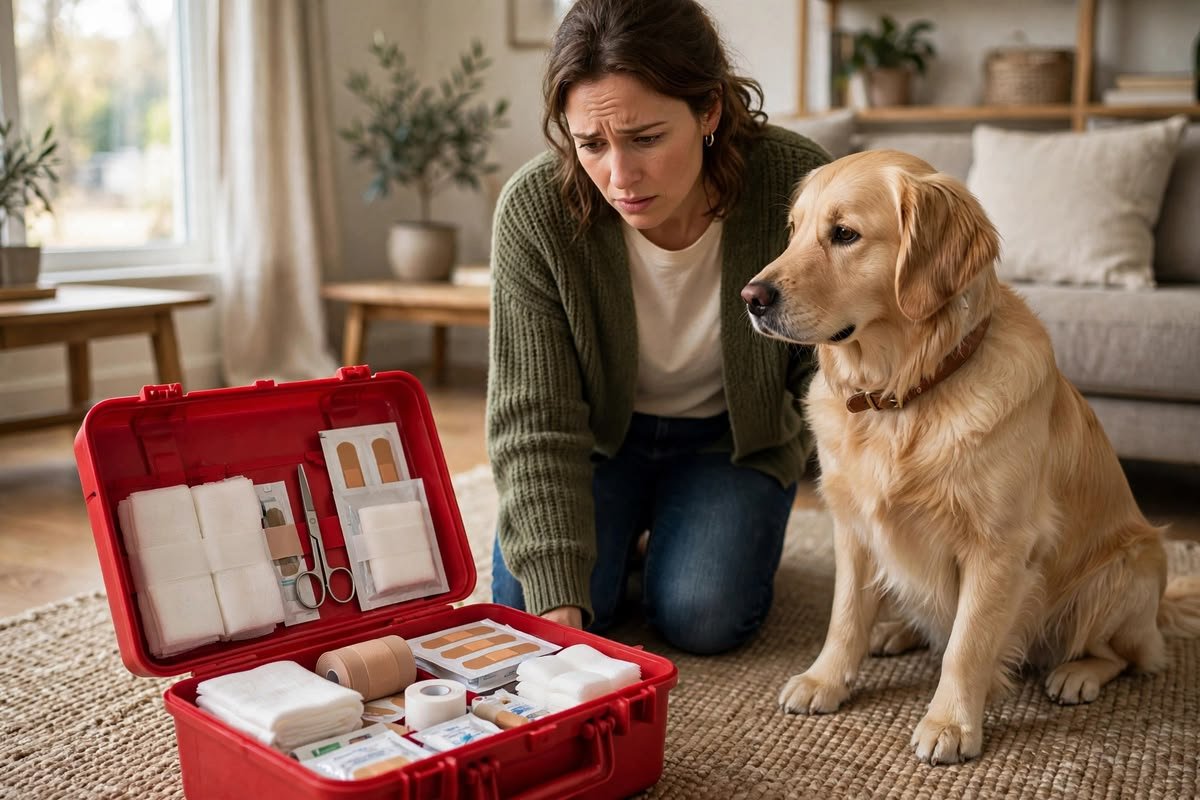
Accidents don’t wait for business hours. A sliced paw pad on a Sunday hike, a bee sting during a backyard game of fetch, a toxic snack swiped off the counter — these moments happen fast, and having the right supplies on hand can mean the difference between a calm response and a panicked scramble. A well-built pet first aid kit isn’t just a nice-to-have; it’s one of the most practical investments any dog or cat owner can make.
This guide walks through exactly what belongs in your kit, how to use each item safely, and how to customize your supplies based on your pet’s lifestyle.
Why Every Pet Owner Needs a First Aid Kit
Emergency vet visits are stressful enough without also scrambling to find gauze or a working flashlight. A dedicated kit keeps you calm, organized, and ready to stabilize your pet until professional help arrives. It also saves precious minutes — and in emergencies, minutes matter.
What Makes a Good Pet First Aid Kit?
Before diving into the supply list, keep these fundamentals in mind:
- Container: Choose a sturdy, clearly labeled box with compartments — a fishing tackle box or a soft-sided first aid pouch both work well.
- Accessibility: Store it somewhere every family member can find instantly, such as a hallway closet — never buried in the garage.
- Portability: Keep a compact travel version in your car or hiking bag.
- Freshness checks: Review expiration dates every six months and restock anything used or expired.
How a Pet Kit Differs From a Human First Aid Kit
Many items overlap, but pets have unique needs — and many common human medications are toxic to dogs and cats. Never substitute your own medicine cabinet for pet-specific supplies without veterinary guidance.
Essential Wound Care Supplies
| Item | Purpose |
|---|---|
| Non-stick sterile gauze pads | Cover wounds without sticking to fur |
| Self-adhesive bandage wrap (vet wrap) | Secures gauze without tape |
| Adhesive tape | Backup for traditional bandaging |
| Antiseptic wipes or saline solution | Clean wounds before bandaging |
| Blunt-tip scissors | Trim fur/bandages safely |
| Tweezers | Remove splinters, thorns, ticks |
| Disposable gloves | Keep wounds clean and protect you |
How to Treat a Minor Cut or Scrape
- Gently rinse with saline or clean water to remove debris.
- Pat dry with clean gauze — don’t rub.
- Apply a non-stick pad and secure loosely with vet wrap (snug but not circulation-restricting).
- Monitor for 24–48 hours for swelling, discharge, or odor.
Seek immediate vet care if: bleeding doesn’t stop after 10 minutes of gentle pressure, the wound is deep, or you notice heavy oozing.
Diagnostic Tools for Assessing Your Pet’s Condition
- Digital pet thermometer – Normal resting temp for dogs/cats is 100–102.5°F; rectal thermometers give the most accurate reading.
- Soft, breathable muzzle – Protects you from an accidental bite; never use if your pet is vomiting or struggling to breathe.
- Penlight/flashlight – For checking pupil response or inspecting the mouth and ears.
- Instant cold packs – Reduce swelling from sprains or stings (always wrap in cloth first).
- Towel or blanket – Restrain gently, keep warm during shock, or improvise a stretcher.
Medications and Topicals (Vet-Guided Use Only)
⚠️ Never administer any medication without confirming safety with a vet or poison control first.
- 3% hydrogen peroxide – sometimes used to induce vomiting, only under professional direction
- Activated charcoal – for specific poisoning cases, vet-guided
- Saline eye wash – flushes irritants from the eyes
- Styptic powder – stops minor nail-bleed bleeding
- Pet-safe antiseptic ointment – for minor surface scrapes
Save these numbers inside your kit lid: ASPCA Animal Poison Control Center and your vet’s after-hours line.
Documentation to Keep With Your Kit
- Vaccination records
- A recent photo of your pet
- Vet contact information
- Known allergies/health conditions
- Pet insurance policy number
Customizing Your Kit by Lifestyle
Hikers & Outdoor Adventurers: tick-removal tool, paw balm, collapsible water bowl, pet-safe insect repellent.
Multi-Pet Households: separate muzzles and properly sized bandaging supplies for each animal.
Senior or Chronically Ill Pets: a rotated spare supply of regular medications, plus mobility aids like a soft sling.
Printable Quick Checklist
- Non-stick gauze pads
- Self-adhesive bandage wrap
- Adhesive tape
- Antiseptic wipes/saline
- Blunt-tip scissors
- Tweezers
- Disposable gloves
- Digital pet thermometer
- Soft muzzle
- Penlight
- Instant cold pack
- Towel/blanket
- Hydrogen peroxide (vet-directed only)
- Styptic powder
- Pet-safe antiseptic ointment
- Vaccination records & vet contact info
- Poison control hotline number
When to Skip the Kit and Go Straight to the Vet
A first aid kit stabilizes — it doesn’t treat. Head to an emergency vet immediately if your pet shows:
- Difficulty breathing or persistent choking
- Uncontrolled or fast-soaking bleeding
- Signs of severe pain (whimpering, hiding, refusing to move)
- Suspected poisoning
- Seizures, collapse, or disorientation
- A hard, distended abdomen (possible bloat)
Final Thoughts
A pet first aid kit is one of the simplest, most affordable ways to protect the animals you love. Stock the wound-care basics, diagnostic tools, vet-approved topicals, and key documents — and you’ll be ready to respond calmly when accidents strike. Take twenty minutes this week to build or refresh your kit. Your future self — and your pet — will thank you.