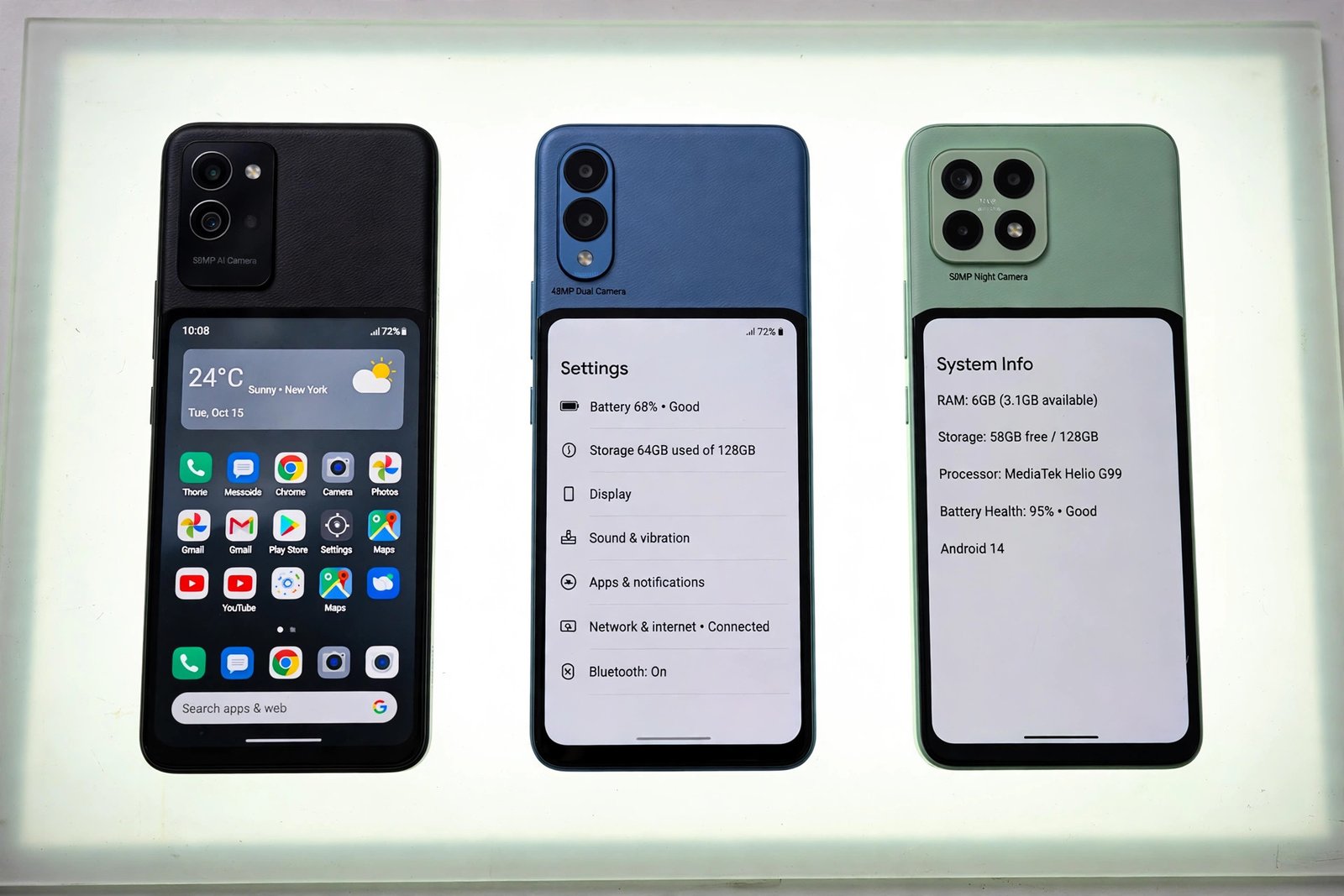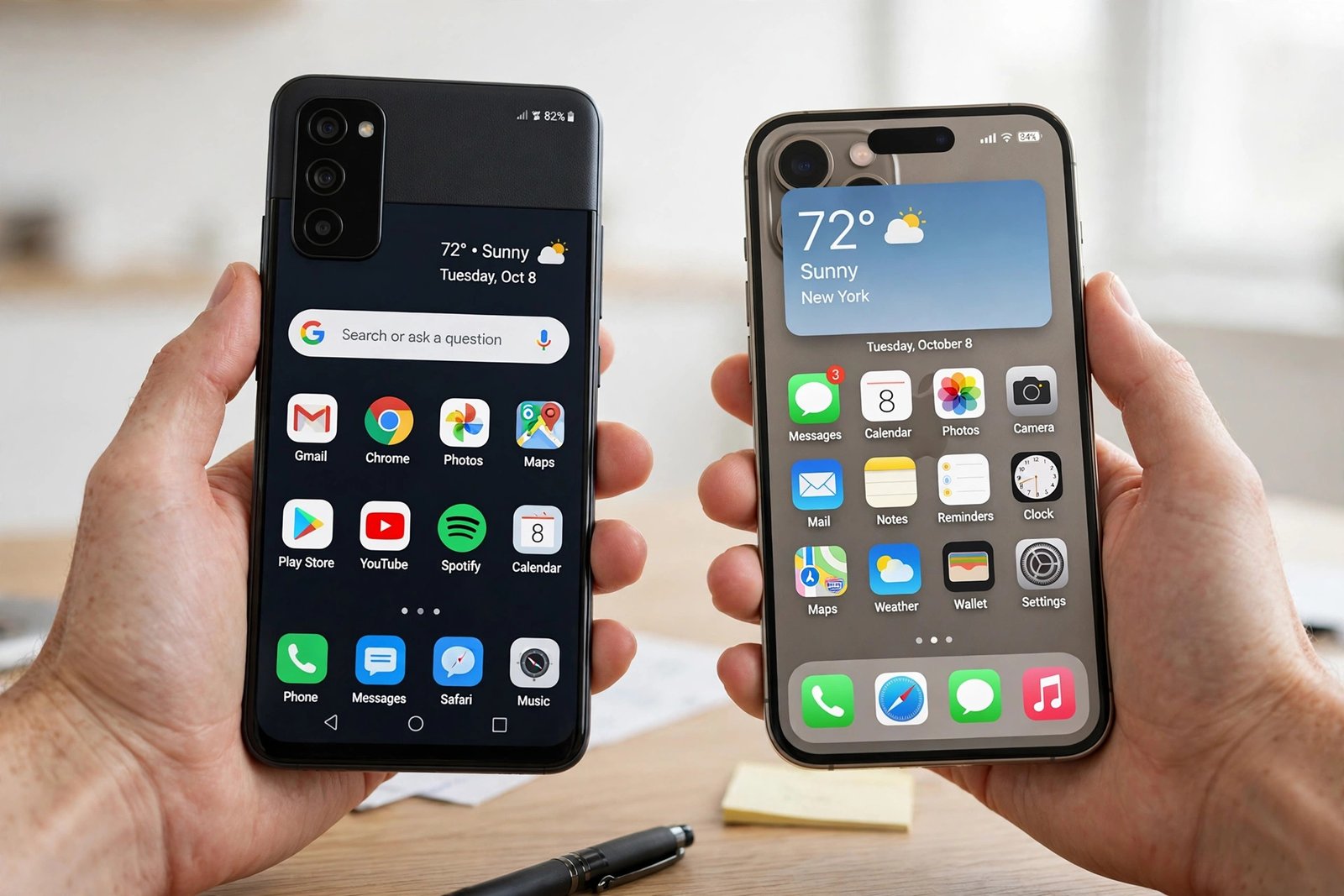
Android vs iPhone is the oldest argument in smartphones, and in 2026 it is still the first question most buyers ask. Both platforms are excellent now: cameras are superb, batteries last a full day, and apps are available everywhere. The real differences are smaller than they used to be, but they still matter — in how the phone feels, how long it is supported, how it works with your other devices, and how much choice you get.
This guide compares Android and iPhone honestly in 2026: design and choice, software and updates, cameras, battery, privacy, price and value, and who each platform suits best. By the end, you should know which one to buy — and which reasons for choosing it are real, and which are just habit.
Android vs iPhone at a Glance
Android is an operating system made by Google and used by many manufacturers, including Samsung, Google itself, OnePlus and others. That means enormous choice: phones at almost every price, in many sizes, with different cameras, batteries and designs. iPhone is made only by Apple, running iOS, with a small, focused range of models each year.
That difference shapes everything else. Android gives you more choice and more control, but also more variation in quality and support. iPhone gives you fewer choices, but a very consistent experience, long software support, and tight integration with other Apple products such as the Mac, iPad and Apple Watch.
Design, Choice and Price
If you want a phone with a particular feature — a huge battery, a stylus, a folding screen, or a very low price — Android is the only place to find it. The range runs from budget phones to premium flagships, and you can choose a size and design that suits you. Our guide to the best budget smartphones under $300 in 2026 shows just how capable affordable Android phones have become.
iPhone offers far less choice: a handful of models, in a few sizes, at prices that start higher than most Android phones. What you get for that is a consistently premium build, a familiar design, and a phone that holds its value well when you sell it later. If you want the cheapest capable smartphone, Android wins. If you want a premium phone and you are already comfortable with Apple’s prices, iPhone is a straightforward choice.
Software, Updates and Ease of Use
iOS is known for being simple and consistent: the same gestures, the same settings, and apps that generally look and behave the same. Many people find it easier to learn, and Apple supports iPhones with software updates for many years, so an older iPhone still gets new features and security fixes.
Android is more customisable: you can change the home screen, the default apps, the keyboard, and much more. Google’s own Pixel phones get fast updates, and Samsung now offers long update support on its flagship models, but cheaper Android phones may receive fewer updates and stop sooner. If you like to make a phone your own, Android is more fun. If you want a phone that just works the same way every day, iPhone is hard to beat.
Camera
Both platforms take excellent photos in 2026, and the differences are about style rather than quality. iPhones tend to produce natural, consistent photos and very good video, which is why they are popular with people who film a lot. Pixel phones are famous for computational photography — excellent night shots and smart editing features — while Samsung phones often produce brighter, more vivid images.
For most people, the best camera is the one on the phone they already like using. Check sample photos from the exact model you are considering, rather than relying on the brand name, because camera quality varies far more between models than between Android and iPhone as a whole.
Battery Life and Charging
Battery life depends more on the specific model than on the platform. Many Android phones have larger batteries and charge faster, with some offering very fast wired charging. iPhones have smaller batteries on paper, but iOS is efficient, so they often last just as long in real use. Wireless charging is common on both, and both platforms now offer battery health features that help a phone last longer over the years.
When you compare phones, look at real-world battery tests for the model you want, not just the battery size. A phone that lasts a full day with your normal use is what matters, not a number on a specification sheet.
Privacy and Security
Apple makes privacy a selling point: it asks apps to request permission before tracking you, and it processes many features on the device rather than in the cloud. Android has also improved a lot, with privacy controls, permission settings and regular security updates, especially on Pixel and Samsung phones. Both platforms are safe if you keep them updated, use a screen lock, and download apps only from the official store. For the basics that protect any phone, our guide on how to protect your online accounts is worth reading whatever phone you choose.
Apps and Ecosystem
Almost every popular app is available on both platforms, and the differences are small for most people. Some apps launch first on iPhone, and some features arrive on Android first — it changes from year to year. The bigger question is the ecosystem around the phone. If you use a Mac, an iPad and an Apple Watch, an iPhone works with them seamlessly. If you use Windows, Google services and a smart TV, Android fits more naturally. Your other devices are often the best guide to which phone to buy.
Android vs iPhone: Which Should You Buy in 2026?
Choose Android if…
You want more choice, a lower price, a larger screen or a specific feature, you like to customise your phone, or you use Google services and Windows. Android is the best choice for most budget buyers and for anyone who wants a phone that is truly theirs.
Choose iPhone if…
You already use Apple products, you want long software support and a consistent, simple experience, you film a lot of video, or you want a phone that is easy to resell. iPhone is the best choice for people who value simplicity and longevity over choice.
Switching is easier than it used to be
Moving from Android to iPhone, or the other way, is much simpler than it was a few years ago. Both platforms offer a transfer app that moves your photos, contacts and messages, and most of your apps will be available on the other side. The hardest part of switching is not the transfer — it is relearning small habits, such as where settings live. Give yourself a week, and the new phone will feel normal.
Frequently Asked Questions
Is Android better than iPhone in 2026?
Neither is better for everyone. Android offers more choice and better value at low prices, while iPhone offers a simpler experience, long updates and strong integration with other Apple devices. The best phone is the one that fits your budget and your other devices.
Do iPhones last longer than Android phones?
iPhones generally receive software updates for longer than most Android phones, although Samsung and Google now offer long support on their flagship models. A well-looked-after phone from either platform can last four to five years.
Is it hard to switch from Android to iPhone?
No. Apple’s Move to iOS app transfers your contacts, photos, messages and many apps, and Google offers a similar tool for moving the other way. Set aside an hour, keep both phones charged, and check that your important apps are installed before you erase the old phone.
Which phone has the best camera in 2026?
It depends on the model, not the platform. The latest iPhone, Pixel and Samsung flagships all take excellent photos. Look at camera reviews for the specific models in your budget, and try the camera in a shop if you can.
Android vs iPhone in 2026 is less about which platform is better and more about which one fits your life. Android gives you choice, value and control; iPhone gives you simplicity, consistency and longevity. Choose based on your budget, your other devices, and how you actually use a phone — not on which side of the argument your friends are on. Either way, you will get a very good phone.