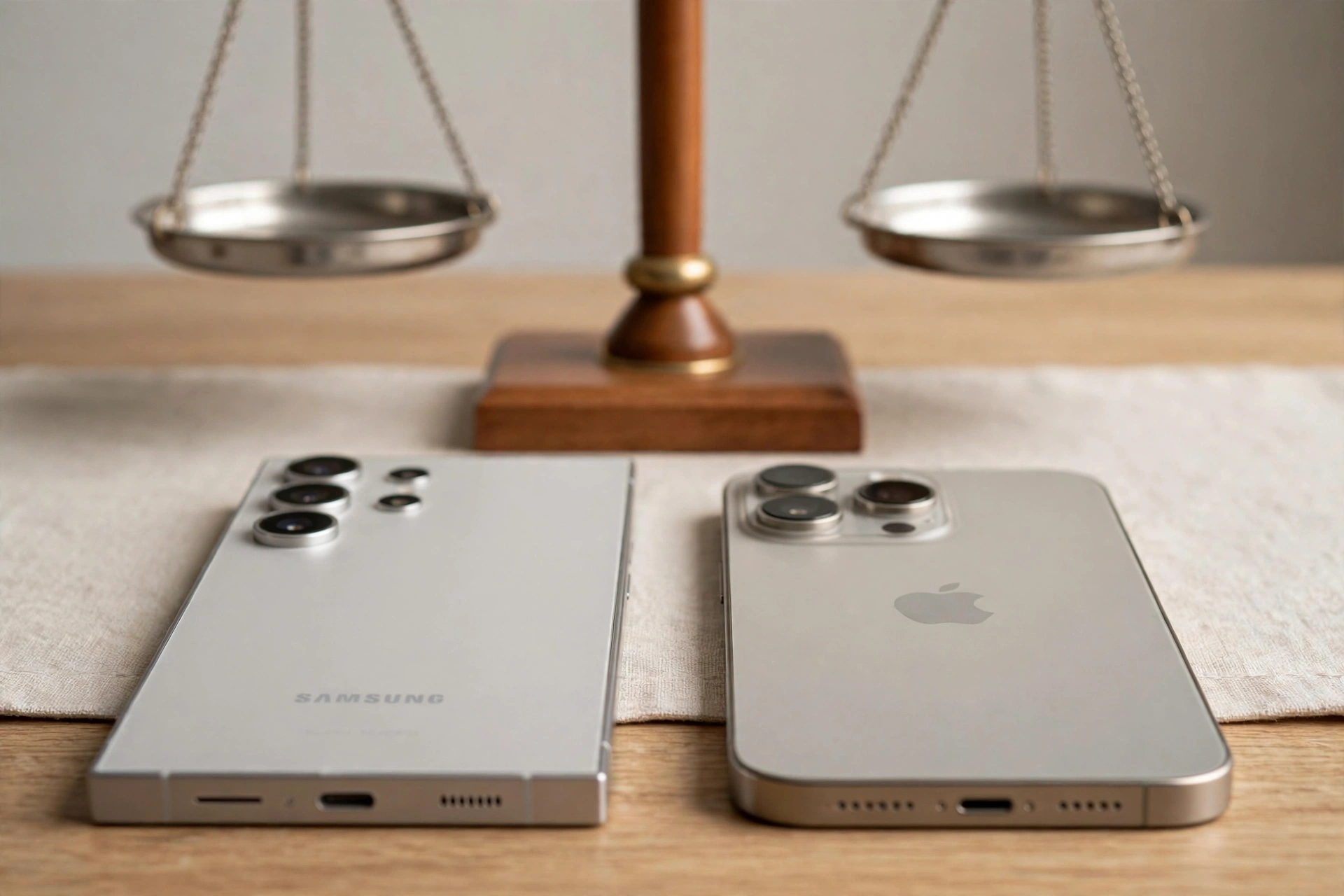
The iPhone vs Samsung debate is the biggest decision most phone buyers face in 2026. Apple and Samsung make the two most popular premium phones in the United States, and both are excellent, but they are excellent in different ways. The iPhone offers simplicity, long software support, and tight integration with other Apple products. Samsung’s Galaxy phones offer bigger screens, more customization, and cutting-edge hardware like powerful zoom cameras. This guide compares them head to head on design, performance, cameras, battery, software, and price, so you can pick the right phone with confidence.
iPhone vs Samsung at a Glance
| Feature | iPhone | Samsung Galaxy |
|---|---|---|
| Design | Premium titanium frame, clean and minimal | Sleek glass and metal, larger screen options |
| Display | Bright OLED, excellent color accuracy | Brighter OLED, smoother 120 Hz refresh |
| Performance | Extremely fast, efficient Apple chip | Very fast Snapdragon chip, great for gaming |
| Cameras | superb video, natural colors | Superb zoom, versatile photo modes |
| Battery | All-day battery, efficient standby | All-day battery, faster charging |
| Software | iOS: simple, private, long updates | Android: customizable, AI-packed |
| Price | Premium, holds resale value well | Premium, frequent discounts and trade-ins |
Design and Display
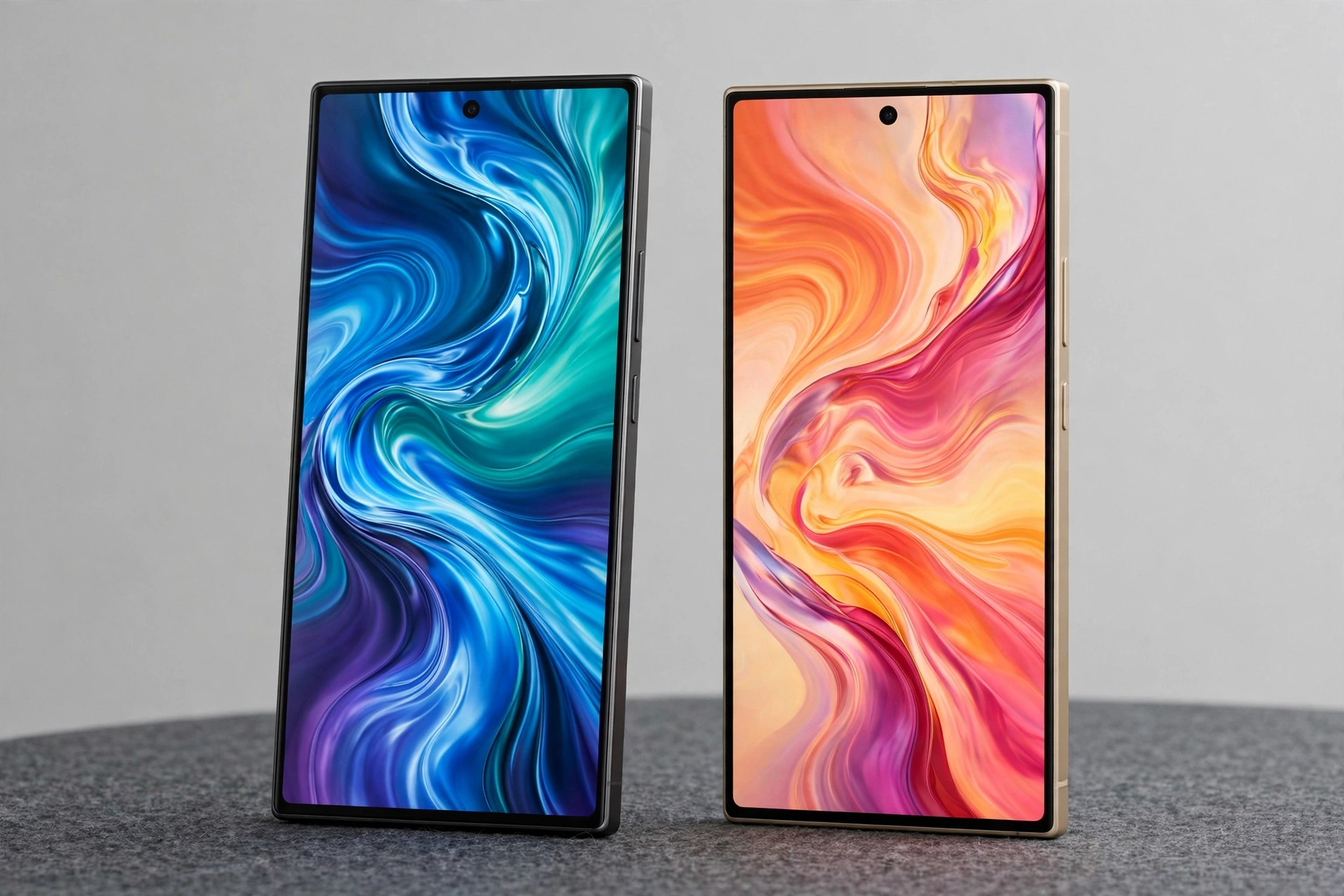
Both phones feel premium, but they look and feel different in the hand. The iPhone has a clean, minimal design with flat edges and a titanium frame on the Pro models, and it comes in a small set of refined colors. Samsung’s Galaxy phones feel slightly more futuristic, with curved glass, slimmer bezels, and a wider range of sizes, including large-screen Ultra models for people who want a phone that doubles as a mini tablet. On displays, Samsung has a small edge: its screens get brighter outdoors and the 120 Hz refresh rate makes scrolling feel smoother. Apple’s display is no slouch, though, with superb color accuracy and brightness that is more than enough for everyday use. If you watch a lot of video or read outdoors, Samsung’s screen wins by a nose. If you prefer a compact phone that is easy to hold, the standard iPhone is the better fit.
Performance and AI Features
In raw speed, the two are closer than ever. Apple’s chip is still the efficiency king: apps open instantly, games run flawlessly, and the phone stays cool under load. Samsung’s latest Snapdragon chip is right behind it and actually pulls ahead in sustained gaming sessions thanks to better cooling in the larger models. The bigger difference in 2026 is AI. Samsung packs its Galaxy AI features front and center: live call translation, photo editing that removes unwanted objects, and smart summaries built into the keyboard and browser. Apple’s AI features are more subtle and privacy-focused, running on-device where possible, with writing help and photo cleanup woven into the apps you already use. Both phones also run the best free AI tools beautifully, so whichever you choose, you can use ChatGPT, Gemini, and the rest on the go. If you want the flashiest AI tricks today, Samsung leads. If you prefer AI that stays in the background and protects your data, Apple has the edge.
Cameras Compared
Camera quality is where personal taste matters most. The iPhone is the best phone for video: its footage is smooth, colors look natural, and it handles tricky lighting better than any rival. It is the phone that filmmakers and content creators reach for first. Samsung wins on versatility. Its zoom is in a different league, letting you capture sharp photos of subjects far away, and its night mode brightens dark scenes impressively. Samsung’s photos tend to look punchier and more saturated straight out of the camera, which many people prefer for social media. For portraits, both are excellent, with the iPhone producing more natural skin tones and Samsung producing brighter, more dramatic shots. There is no wrong answer here: pick iPhone for video and natural color, or Samsung for zoom and bold photos.
Battery Life and Charging
Both phones comfortably last a full day of normal use, including social media, maps, streaming, and photos. Samsung’s larger models have a slight advantage in raw battery size and will usually end the day with more charge left, especially if you use power-hungry features like the 120 Hz display at full brightness. Apple compensates with efficiency: its chip and software are so well optimized that the smaller battery lasts just as long in real use. Where Samsung clearly wins is charging. Its wired charging is faster, and it supports reverse wireless charging, so you can top up your earbuds from the back of the phone. Apple’s charging has improved but is still slower, and its MagSafe magnetic accessories are a genuinely useful perk if you invest in the ecosystem.
Software and Updates
Software is the deepest difference between the two. iOS is simple, consistent, and private by default. Everything works the same way across Apple’s apps, and updates arrive on all supported iPhones on the same day, with support typically lasting five to six years. If you own a Mac, iPad, or Apple Watch, the iPhone connects to them in ways Android cannot match: calls, messages, and files flow between devices effortlessly. Samsung’s Android is far more flexible: you can customize the home screen, use any default apps you like, and split the screen to run two apps at once. Samsung now promises seven years of software updates on its flagships, matching or beating Apple. It also works beautifully with Windows PCs. Choose iOS if you value simplicity and the Apple ecosystem. Choose Samsung if you want freedom and customization.
Price and Value
Flagship iPhones and Galaxy phones start at similar prices, but the real cost of ownership differs. iPhones hold their resale value better than any other phone, so a two-year-old iPhone is still worth a meaningful amount when you upgrade. Samsung phones often launch at the same price but go on sale quickly, with generous trade-in offers and carrier deals that can cut the price dramatically, especially around holidays and launch events. Over three years, the total cost can be very close. Also consider accessories and services: AppleCare and iCloud add up if you use them, while Samsung’s storage upgrades and bundled offers can sweeten the deal. If you keep your phone for years, the iPhone’s resale value is a real advantage. If you buy during a sale, Samsung often gives you more for your money.
Which Phone Should You Buy?
It comes down to what you already own and what you value most. Buy the iPhone if you use a Mac or iPad, shoot a lot of video, want the simplest experience, or plan to keep the phone for five years and sell it later. Buy the Samsung Galaxy if you want the brightest screen, the best zoom camera, faster charging, and more customization, or if you use a Windows PC and want a phone that plays nicely with it. Photographers who love zoom should pick Samsung. Video creators should pick iPhone. Gamers will be happy with either, though Samsung’s bigger screens and cooling give it a small edge. Whichever phone you choose, keep it safe at home: both phones hold your photos, passwords, and payment details, so take a few minutes to follow our guide on how to secure your home Wi-Fi network. And if you are still deciding, hold both in a store. The phone that feels right in your hand is usually the right choice.
Frequently Asked Questions
Is the iPhone or Samsung better in 2026?
Neither is objectively better. The iPhone wins on video quality, simplicity, resale value, and integration with Apple products. Samsung wins on display brightness, zoom cameras, charging speed, and customization. The best phone is the one that fits your habits and the devices you already own.
Do Samsung phones get updates as long as iPhones?
Yes, now they do. Samsung promises seven years of software and security updates on its recent flagship Galaxy phones, which matches or exceeds Apple’s typical support window. Both phones will stay current for years.
Which phone has the better camera?
For video, the iPhone is the clear winner. For zoom photos and versatility, Samsung is ahead. For everyday photos, both are superb and the difference comes down to taste: natural colors on iPhone, bold and punchy on Samsung.
Can I switch from iPhone to Samsung easily?
Yes. Samsung’s Smart Switch app moves your photos, contacts, messages, and most apps from an iPhone in under an hour. Moving the other way is just as easy with Apple’s Move to iOS app. Paid apps and some chat histories may not transfer, so check those first.
Are iPhones more secure than Samsung phones?
Both are very secure when kept updated, with strong encryption and regular security patches. iOS is a more locked-down system, which reduces risk, while Samsung adds its Knox security platform on top of Android. Good habits matter more than brand: use a strong passcode, enable two-factor authentication, and keep your software updated.
Final Verdict
In 2026, you cannot make a bad choice between the iPhone and the Samsung Galaxy: both are fast, beautifully made, and packed with AI features. Pick the iPhone for simplicity, video, and long-term value. Pick Samsung for the best screen, the best zoom, and the freedom to make the phone your own. Either way, you are getting one of the best phones ever made.